Tramadol Information
Citra Tramadol 100mg: Product Verification and Safety
Understand the FDA warning about Citra 100mg products, key tramadol safety concerns and questions to bring to a licensed pharmacist.
TRAMADOL & MEDICATION INFORMATION
Educational information only. Not a substitute for individualized medical advice, diagnosis, or treatment.
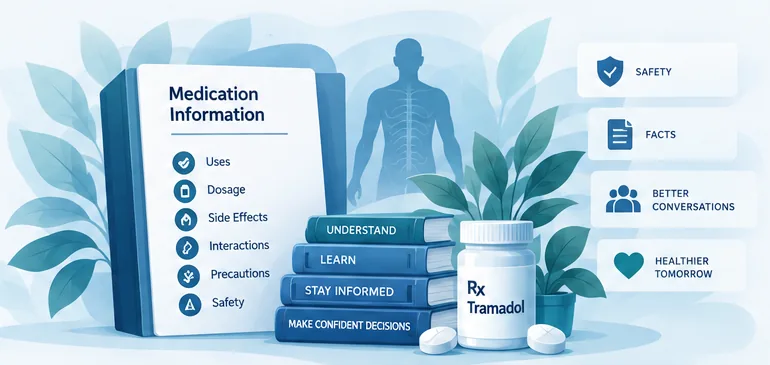
Explore focused guides covering what Tramadol is, why it may be prescribed, dosage information, side effects, precautions, interactions, warnings, and dependence or withdrawal considerations.
Overview, classification and how it works.
Learn More →General medical uses and treatment context.
Learn More →General dosage information and important considerations.
Learn More →Common and serious side-effect information.
Learn More →Important factors that may affect medication safety.
Learn More →Interactions with medicines and other substances.
Learn More →Important safety warnings and risk information.
Learn More →Dependence, discontinuation and withdrawal information.
Learn More →Explore educational resources across pain management, chronic pain, sleep disorders, anxiety, and erectile dysfunction.
A medication question can lead to several others. TramadolInformation organizes these questions into focused educational resources so readers can move from a basic explanation to more detailed safety information.
Learn what a medicine is intended to treat and the context in which it may be considered.
Explore side effects, precautions, warnings, and interaction considerations without sales-oriented language.
Use educational information to support informed conversations with qualified healthcare professionals.
SAFETY FIRST
Prescription medicines can provide important benefits, but they can also carry meaningful risks. Information about side effects, interactions, contraindications, dependence, and safe use belongs alongside information about potential benefits.
Read Medical Disclaimer →Recent educational articles from across the publication.

Understand the FDA warning about Citra 100mg products, key tramadol safety concerns and questions to bring to a licensed pharmacist.
An informational comparison of tramadol and tapentadol, covering differences, side effects, interactions and questions for your clinician.
Learn how common ED medications improve blood flow during sexual stimulation, how treatment options differ and why nitrate interactions matter.
Learn why Tramadol and alcohol can be a risky combination, how sedation and breathing can be affected, and which symptoms…
Learn how Tramadol can affect driving, alertness and coordination, why impairment varies, and what factors can increase drowsiness.
Use these questions to discuss Tramadol benefits, alternatives, side effects, interactions, treatment goals, dependence and safe discontinuation with a clinician.
The design and content system are built around publication trust rather than pharmacy-style promotion.
Complex topics can be explained in understandable language without removing important safety context.
Benefits, limitations and risks can be presented together rather than as promotional claims.
Important claims can be linked to current regulatory, clinical, or government health sources.
Articles support author, reviewer, publication and update information.
ABOUT THE PUBLICATION
TramadolInformation is an educational health-information publication focused on Tramadol and related medication topics. Its purpose is to make medication information easier to understand while maintaining transparency about sources, authorship, limitations, and safety considerations.
Learn About Our Editorial ApproachFEATURED GUIDE
Tramadol information is most useful when it explains both why the medicine may be prescribed and the safety questions that come with it. TramadolInformation is designed as an educational publication: it organizes current, plain-language information about Tramadol and related medication topics without presenting prescription medicines as products to buy.
A medication page should help you understand the purpose of a medicine, the important risks, and the questions that deserve a conversation with a qualified healthcare professional. It should not tell an individual reader that a particular prescription is right for them. That decision can depend on diagnosis, medical history, age, other medicines, allergies, kidney or liver function, pregnancy status, and many other factors.
For Tramadol specifically, current U.S. prescribing information identifies it as an opioid analgesic and includes significant warnings about misuse, addiction, overdose, breathing problems, accidental exposure, and interactions. Those risks are why this site keeps safety information close to every Tramadol guide rather than placing it in fine print.
If you are researching Tramadol for the first time, begin with the complete Tramadol Information hub. From there you can move into dedicated guides on uses, general dosage considerations, side effects, precautions, interactions, warnings, dependence and withdrawal.
The hub also links to broader pain and chronic-pain information. That context matters because pain treatment is not limited to one medicine or one medication class. Depending on the cause and circumstances, care may involve non-opioid medicines, rehabilitation, movement, psychological support, procedural care, or other approaches.
A trustworthy medication guide should not describe benefits without also discussing limitations, side effects, contraindications, and interaction risks. When you read about any prescription medicine, check whether the page explains who may need extra caution, whether other medicines or substances can increase risk, and what symptoms may require prompt or emergency care.
Tramadol can interact with other medicines and substances, including combinations that increase central nervous system depression or affect serotonin pathways. A complete medication list is therefore important when a clinician or pharmacist evaluates safety.
Health information changes. Product labeling can be revised, safety communications can be updated, and professional guidance can evolve. TramadolInformation includes source sections and visible update dates on important pages. Author and medical-review information should be displayed only when it is truthful and verifiable.
The site gives priority to official prescribing information, U.S. government health resources, professional guidance, and primary literature when a specific clinical question requires it.
Online information can help you understand terminology and prepare questions, but it cannot assess your individual risk. Seek professional advice when symptoms are changing, a medicine is not working as expected, side effects are persistent, you are considering a dose change, or you are worried about dependence or withdrawal.
Possible overdose or serious breathing problems require urgent medical attention. Do not rely on a website to manage an emergency.
Tramadol information covers what the medicine is, why it may be prescribed, general dosage considerations, side effects, precautions, interactions, warnings and dependence-related topics.
No. The site is designed as an educational health-information publication and does not sell prescription medicines.
No. Dosage decisions are individualized and should follow the prescribing healthcare professional and the specific product labeling.
Start with the Tramadol Information hub, then follow the links to the topic that matches your question.
Tramadol is a prescription opioid medicine used in certain pain-treatment situations. Individual use and treatment decisions should be discussed with a qualified healthcare professional.
The appropriate use depends on the specific formulation, the patient, and the clinical situation. Our Tramadol hub explains the general context and links to detailed guides.
Side effects vary among people and formulations. See our dedicated side-effects guide for common and serious reactions and when professional help may be needed.
Yes. Medication and substance interactions can be clinically important. A complete medicine list should be discussed with the prescriber or pharmacist.
Physical dependence can occur with opioid medicines. Our dependence and withdrawal guide explains this distinction and why medication changes should be professionally guided.
No. TramadolInformation provides general educational information and does not replace individualized medical advice, diagnosis, or treatment.
Explore the central Tramadol guide for information about uses, dosage, side effects, precautions, interactions, warnings, dependence, and withdrawal.
Explore Tramadol Information